
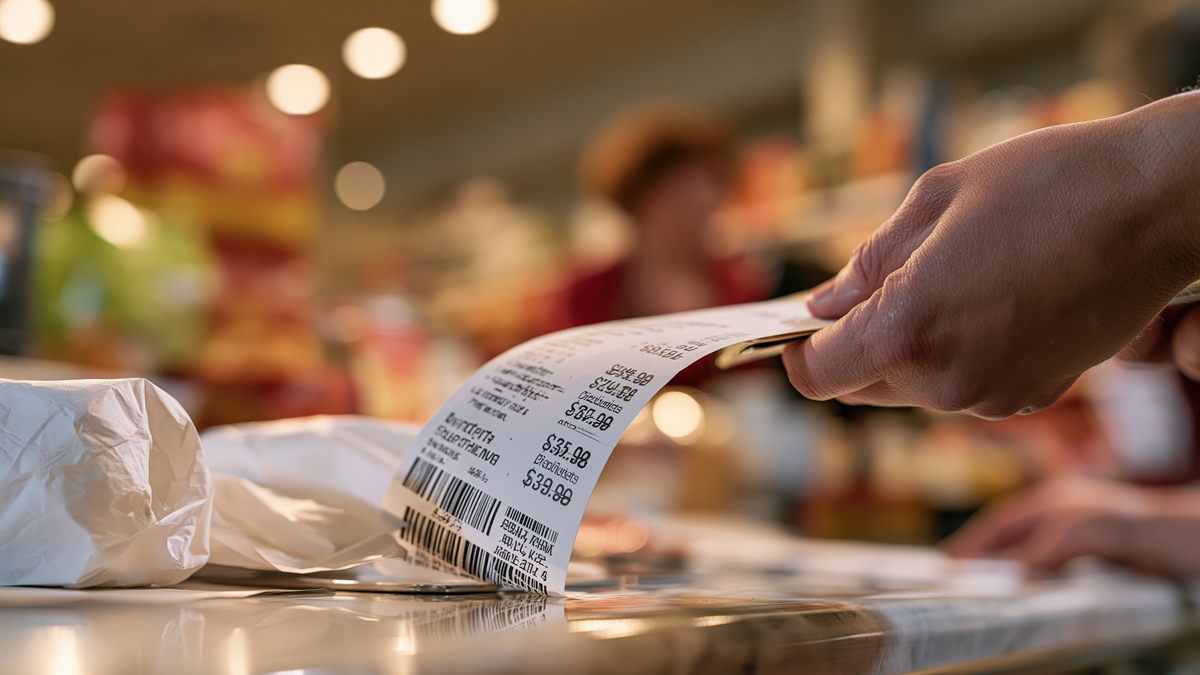
You grab a $6.99 bottle of shampoo, the shelf tag agrees, and the till rings it up at $9.49. Or you spot a $1,200 TV listed online for $119. Both are price errors, but what you are owed is completely different in each case.
The short version:
- Scanned higher than the shelf price? At most big Canadian stores you pay the lower price, and the item is free if it costs $10 or less. If it costs more, you get $10 off.
- In Quebec, this rule is law, not a store promise, and the amount is $15.
- Two different prices on the product or the display? Federal law says the store has to charge the lowest one.
- A crazy-low price online? Outside Quebec, the store can usually cancel your order. Sometimes it doesn’t, which is why price errors are worth jumping on.
Price errors at the checkout: the Scanner Price Accuracy Code
The Scanner Price Accuracy Code (you may also see it called the Scanning Code of Practice) has been around since 2002. It is run by the Retail Council of Canada, and the Competition Bureau endorses it. Stores sign up voluntarily, but most of the big chains have.
It applies when an item without its own price sticker scans at the till for more than the price on the shelf, sign or flyer. When that happens:
| The correct (lower) price is… | What you get |
|---|---|
| $10 or less | The item for free |
| More than $10 | $10 off the correct price |
| Buying several of the same item | The first one free or $10 off; the rest at the correct price |
Which stores follow it?
Retailers that have signed on include Best Buy, Canadian Tire, Costco, Giant Tiger, Home Depot Canada, Loblaw stores (including Real Canadian Superstore, No Frills and Shoppers Drug Mart), Metro, Rona, Sobeys and Walmart. In total the code is honoured at thousands of locations across more than 30 chains.
The easiest way to check a particular store is the sign. Participating stores post the code near the checkouts.
What the code doesn’t cover
- Items with their own price sticker or tag (clearance stickers, hang tags, printed labels on electronics and books)
- Items sold by weight, such as loose produce
- Alcohol, tobacco and other government-regulated products
- Prescription drugs and anything kept behind the counter
- Loyalty or member-only prices, such as PC Optimum offers
- Products sitting on the wrong shelf, which only count if the item matches its shelf label
- Flyer prices limited to stores that don’t include the one you’re in
How to claim it
- Watch the screen as items scan, or check your receipt before you leave.
- Tell the cashier or customer service desk. At self-checkout, call the attendant.
- Show the shelf price. A photo of the tag on your phone speeds things up.
- Mention the code by name if staff only offer to fix the price. Not every cashier applies the free-item part automatically.
- Still stuck? Ask for a manager. If the store won’t resolve it, the code’s signage lists a complaint line (1-866-499-4599). The Retail Council also takes complaints online.
Quebec: the rule is law, and it’s $15
Quebec doesn’t use the voluntary code. It has its own Price Accuracy Policy under the Consumer Protection Act, and every store that uses barcode scanners must follow it. Since May 7, 2025, the amount is $15:
- If the advertised price is $15 or less, you get the item free.
- If it’s more than $15, you pay the lowest advertised price, minus $15.
- If you buy several of the same item, the compensation applies to one of them.
Stores have to post the policy beside every checkout and every self-serve price scanner. Items without a barcode, such as fruit, vegetables and individually tagged clothing, are excluded, as are tobacco, pharmacy-only medication, milk and most alcohol.
Two different prices? The double-ticketing rule
This one applies across Canada, and it’s the law, not a voluntary code. Section 54 of the Competition Act says a store can’t charge more than the lowest of two or more prices it shows for the same product at the same time. That includes prices printed on the product or its packaging, on a tag or sticker attached to it, and on an in-store display or sign.
So if a box has two price stickers, or the shelf sign and the sticker disagree, you’re entitled to the lower one. You don’t get the item free under this rule, but you can combine it with the Scanner Code where that applies.
Online price errors: can the store cancel?
This is where most of the famous price errors happen: the $40 laptop or the 95%-off dishwasher. The rules are much less in your favour.
Outside Quebec
No provincial law outside Quebec clearly forces a retailer to honour an online pricing mistake. Almost every Canadian store’s terms of sale reserve the right to cancel orders placed at a wrong price. Canadian Tire’s pricing policy, for example, says plainly: “We reserve the right to correct errors at any time.” An order confirmation email usually doesn’t lock the price in either; the sale typically isn’t final until the item ships.
That said, stores do sometimes honour price errors, especially smaller ones, or when the mistake is caught after orders have shipped. That’s why deal hunters move fast: there’s little downside to trying, and every so often it pays off.
In Quebec
Quebec has the strongest protection in the country. Consumer groups such as Option consommateurs argue that the Consumer Protection Act and the Civil Code let a buyer keep goods bought at an erroneous price. Quebec courts haven’t been fully consistent, though: some have accepted a merchant’s “it was a mistake” defence, especially for obvious one-off errors.
How to make the most of an online price error
- Order quickly. Most errors are fixed within hours, sometimes minutes.
- Buy a normal quantity. Orders for one or two units are more likely to slip through than an order for 20.
- Pay by credit card. If the order is cancelled, the charge is usually just a pending authorization that drops off. Avoid gift cards or store credit you’d have to chase down.
- Screenshot everything: the listing, the cart and the confirmation email.
- Be polite if it’s cancelled. Customer service sometimes offers a goodwill discount or coupon, and arguing rarely changes the outcome outside Quebec.
- Don’t count on it. Treat a price error as a lottery ticket, not a sure thing.
Where to find price errors
When we spot a genuine price error, we post it with a red PRICE ERROR badge. You can see every live one with the Price Errors filter. Because errors can disappear in minutes, the fastest way to catch them is Deal Alerts: tell us what you shop for and we’ll email you when something lands.
It also pays to know which stores will price match, so you can get a lower price from a competitor without leaving the store.
FAQ
Is a price error the same as a sale?
No. A sale is a price the store chose. A price error is a mistake: a wrong shelf tag, a scanning mismatch, or a typo online. In-store scanning mistakes are covered by the rules above; online typos generally aren’t, outside Quebec.
Can a store refuse the Scanner Price Accuracy Code?
Participating stores have agreed to follow it, so they shouldn’t. If staff only correct the price, politely point to the code’s sign near the checkout. If the store isn’t a participant, it doesn’t have to, but it still can’t charge more than the lowest price it displayed.
Does it work at self-checkout?
Yes. Call the attendant before you pay. In Quebec, the policy has to be posted at self-checkouts too.
Does the Scanner Code apply to online orders?
No. It only covers items scanned in a physical store.
What if I only notice after I’ve paid?
Go back to customer service with the receipt and, ideally, a photo of the shelf price. Many stores will still apply the code if the shelf tag hasn’t been changed yet, so go back promptly.
This guide is general information, not legal advice. Last checked October 2026. Store policies can change, so check the sign at the store or the retailer’s website if something doesn’t match.


